
バナー

ブログ

ホームページ ブログ

What is a TFT LCD Module and How to Choose the Right One?

What is a TFT LCD Module and How to Choose the Right One?

March 27, 2026

In the current landscape of industrial automation, medical diagnostics, and smart infrastructure, the visual interface is often the most critical touchpoint between a machine and its user. Whether you are developing a next-generation infusion pump, a rugged CNC controller, or a high-end smart home hub, understanding the underlying architecture of a TFT LCD Module is fundamental to ensuring long-term product viability. Unlike consumer-grade tablets or smartphones, professional-grade displays must balance optical performance with extreme environmental resilience, often operating 24/7 in conditions that would cause standard hardware to fail within weeks.


Deciphering Panel Technologies: TN vs. IPS

The first decision any hardware engineer faces is the panel type. Traditionally, TN (Twisted Nematic) panels were the industry workhorse due to their low production costs and rapid response times. However, they suffer from "gray-scale inversion"—a phenomenon where colors shift or wash out when viewed from an angle. For modern professional applications, IPS (In-Plane Switching) or MVA (Multi-domain Vertical Alignment) technologies have become the gold standard.

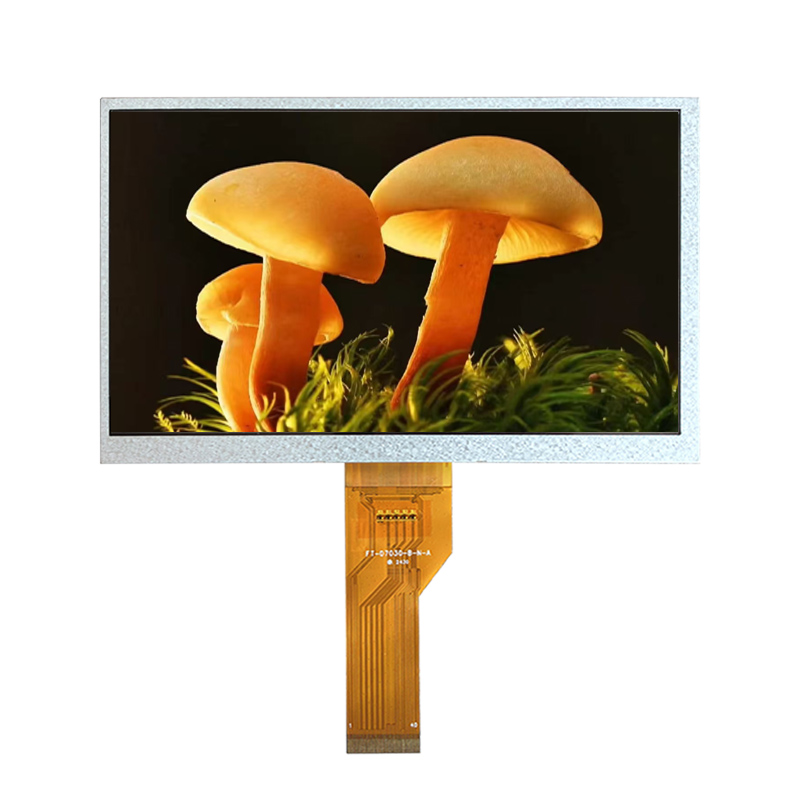
7 inch TFT LCD Module

IPS technology provides true 178-degree viewing angles, which is indispensable for equipment where the operator may not always be positioned directly in front of the screen. For instance, in a busy medical ward or a large-scale manufacturing plant, a 7 inch TFT LCD Module with WSVGA (1024x600) resolution and an IPS panel ensures that critical data remains legible and color-accurate regardless of the viewing position. Furthermore, these mid-sized modules often incorporate LVDS interfaces to mitigate electromagnetic interference (EMI), a common challenge in electrically "noisy" industrial environments.


The Critical Role of Environmental Adaptation

Beyond the pixels and colors, the physical construction of the display determines its lifespan. Consumer displays are typically rated for 0°C to 50°C, but a true Industrial TFT LCD Module is built to thrive in a "wide temperature" range, often spanning -30°C to +80°C. This thermal overhead is essential for outdoor charging stations, heavy machinery used in agriculture, or aerospace ground support equipment.

Another factor frequently overlooked during the initial prototyping phase is "Sunlight Readability." Standard indoor screens usually offer 300 to 500 nits of brightness. For outdoor use, the display must overcome the ambient light of the sun, which requires high-brightness backlights reaching 1000 to 2000 nits. This is achieved through advanced LED string designs and optical bonding techniques that minimize internal reflections between the LCD cell and the touch sensor or cover glass.


Integration: Beyond the Glass

Modern display integration is no longer just about the screen; it is about the "All-in-One" solution. Most B2B buyers now require a pre-integrated touch solution. You must decide between a Capacitive Touch Panel (CTP), which supports multi-touch and gestures similar to a smartphone, or a Resistive Touch Panel (RTP), which is still preferred in heavy industrial settings where operators wear thick gloves or work in high-moisture environments.

The mechanical housing also plays a pivotal role. A metal frame construction provides superior structural rigidity and heat dissipation compared to plastic housings, especially in high-vibration automotive or maritime applications. When you evaluate your bill of materials, consider the long-term availability of the specific TFT LCD Module you select. Industrial projects often have a lifecycle of 5 to 10 years; therefore, choosing a manufacturer that offers "EOL (End of Life) protection" and a stable supply chain is just as important as the initial unit price.


Technical Considerations

Ultimately, the right choice is a convergence of optical clarity, electrical compatibility, and mechanical toughness. By prioritizing an IPS-based TFT LCD Module with wide-temperature support and a robust interface like LVDS or MIPI, you safeguard your project against the most common field failures. As you move from the prototyping stage to mass production, focus on partners who can provide customized cover lens solutions—such as AG (Anti-Glare), AR (Anti-Reflection), or AF (Anti-Fingerprint) coatings—to further enhance the usability of your device in real-world scenarios. A well-chosen display does more than just show data; it defines the perceived quality and reliability of your entire brand in the eyes of the end-user.


購読

ぜひ読んで、最新情報を入手し、購読してください。ご意見をお聞かせください。

送信
Facebook Linkedin Twitter Youtube

著作権 © 2017 Guangdong Shengfeng Technology Co., Ltd. 全著作権所有 .サイトマップ | ブログ | Xml | プライバシーポリシー サポートされているネットワーク

伝言を残す

伝言を残す
当社の製品に興味があり、詳細を知りたい場合は、ここにメッセージを残してください。できるだけ早く返信させていただきます。
送信

ホームページ

製品

お問い合わせ